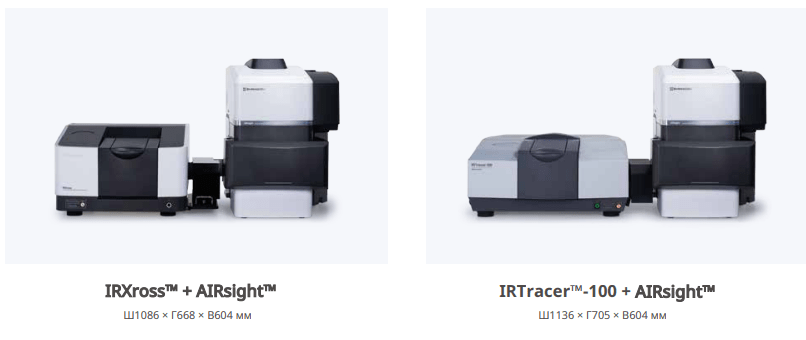



The AIRSight microscope is an infrared and combinatorial microscope that combines two analytical methods: infrared spectroscopy and Raman spectroscopy. This innovative system provides additional molecular information, improving the efficiency of analytical operations. It simplifies all steps of the process, from sample observation to data analysis, allowing even users with limited experience to easily perform analysis. AIRSight is becoming an indispensable tool for accurate and rapid molecular analysis in various scientific and industrial fields.
AIRSight
Key features of Shimadzu AIRsight
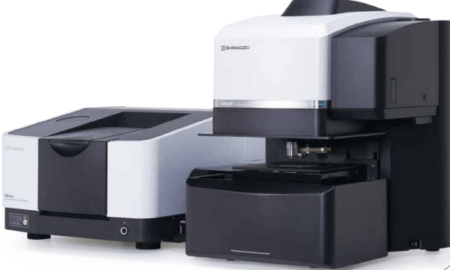
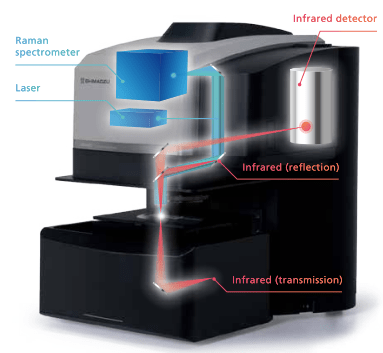
Shimadzu AIRsight offers an innovative approach to spectroscopic analysis, allowing simultaneous acquisition of both infrared and Raman spectra from the same sample position. With a thoughtful design that eliminates the need to move the sample between measurements, users can obtain accurate and consistent results. This feature not only improves work efficiency, but also minimizes possible errors that could occur when analyzing samples with other methods. Thus, AIRsight provides a high level of reliability and convenience for researchers in various fields.
Intelligent software
AIRsolution software controls both IR and Raman measurements in one intuitive interface. The user can easily switch between the two methods and overlay the resulting spectra for comprehensive analysis.
Libraries
The AIRsight system comes with a standard set of spectral libraries containing approximately 12,000 records for a wide range of substances.
Example of additional microscope libraries:
- Contaminant Library for Water and Food Contaminant Analysis
- Thermo- and Photodegradable Polymer Library
- Wiley Raman Raman Spectra Library
Compact and functional design
Shimadzu AIRsight integrates infrared microscopy and Romanov scattering microscopy in a single system, which not only provides high-precision measurements, but also significantly saves space in the laboratory. Thanks to this unique combination, users can conduct comprehensive analysis of both organic and inorganic substances without the need for additional equipment. AIRsight opens up new horizons for researchers, allowing them to efficiently and conveniently obtain accurate spectra from the same sample position. This integration makes the analysis process not only faster, but also much simpler, increasing the overall efficiency of laboratory work.
Wide selection of optics and detectors
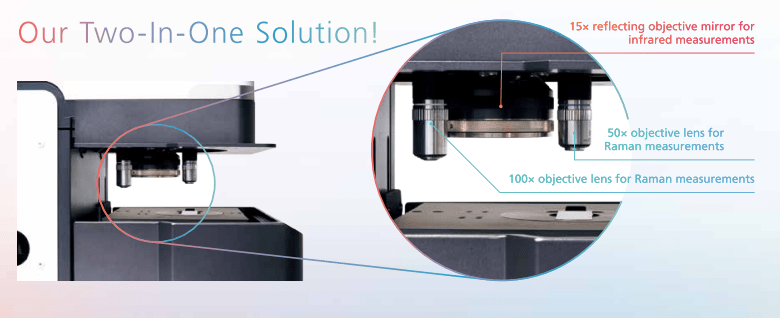
The system is equipped with lenses that provide high spatial resolution for IR and Raman measurements. Built-in 532 nm and 785 nm lasers allow you to choose the most optimal analysis conditions.
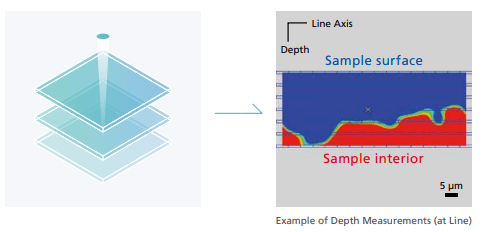
Analysis in depth direction (Z-axis)
AIRsight functionality allows measurements to be made not only in the plane (X-Y), but also along the Z axis, which makes it possible to analyze the internal structure of multilayer samples in detail. This three-dimensional capability provides a more accurate understanding of complex structures, which is important in scientific and industrial research. Thus, AIRsight greatly facilitates the process of studying multilayer materials.
Accessories for IR measurements
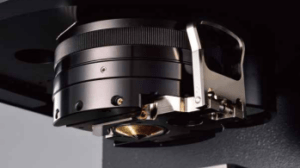
ATR Recting Objective Mirror – Conical prism mirror lens providing 15x magnification and an average incidence angle of 45 degrees. Allows analysis of samples that do not transmit or reflect IR radiation well, such as paper, plastic, or thin films.
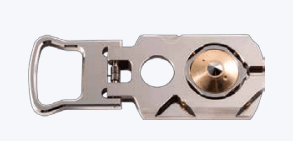
ATR Pressure Sensor – a pressure sensor designed for measurements using the PPI (Normalized Pneumatic Measurement) method. It prevents damage to the prism due to excessive pressure on the sample.
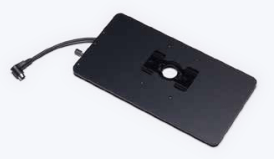
Pressure sensor ATR – is designed for ATR measurements using the ATR objective mirror. This prevents damage to the prism due to excessive pressure. It can also be used to automatically measure how tightly the sample is pressed against the prism.
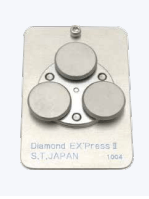
Diamond Cell CII – a compression cell with a synthetic diamond window plate used for analyzing very thin microsamples directly under a microscope.
Optical components
50x Objective Lens – 50x magnification lens for observing areas up to 15 x 20 microns in size.
100x Objective Lens – 100x magnification objective for analyzing extremely small areas down to 7.5 x 10 microns.
Wide-Field Camera – wide-view camera that allows you to observe samples up to 10 x 13 mm in size with the ability to digitally zoom.